
Cedar shake roofing in Lake Oswego, OR delivers the rustic, high-end look that fits wooded lots around Mountain Park and Lake Grove, but the material behaves differently once it spends decades under Douglas fir shade. This guide breaks down 2026 cedar shake costs, how installation actually works, and the specific failure points we find when we tear off aging shake in this market. Skip to the FAQ if you just need fast answers before you call for an estimate.
Cedar Shake Roofing Cost in Lake Oswego, OR for 2026
Cost is the first question most homeowners ask, and the honest answer is: it depends heavily on what's under the old shake. A sound deck keeps the job affordable. Rotted sheathing adds real money, because the crew can't install new shake over soft plywood and pass inspection.
Here's a general breakdown for the Lake Oswego market:
| Project Scope | Typical 2026 Cost Range (installed) |
|---|---|
| Spot shake repair and moss treatment | $600 – $1,800 |
| Tear-off and re-roof, deck in good condition | $18,000 – $28,000 |
| Tear-off and re-roof, deck replacement needed | $26,000 – $42,000 |
| Conversion to architectural shingle or metal | $20,000 – $38,000 |
These are ballpark figures, not a quote. Shake grade, roof pitch, chimney and skylight count, and how much decking needs replacing all move the number. For an exact figure, a roof inspection that opens up a test section of the deck is the only way to price it honestly. Get a free estimate and we'll walk the roof before we quote anything.
Cedar Shake & Wood Shingle Benefits in Lake Oswego's Climate
Cedar shake is a category of wood roofing made from split or sawn cedar logs, installed in overlapping courses rather than flat sheets. It's prized locally for its natural look and for how it performs in wet, shaded conditions common throughout Lake Oswego.
Benefits homeowners here care about most:
- Rustic curb appeal that matches older, tree-lined neighborhoods
- Natural insulation from the wood's cellular air pockets
- Strong wind resistance when shakes are properly nailed and spaced
- A material the USDA Forest Service specifically notes for its insulating properties and rustic fit in wooded settings
That insulation claim isn't just marketing. A USDA Forest Service publication on modern wood shakes and shingles points to the "insulating properties of a natural cedar shake roof" as one of the material's defining advantages. Combined with its flexibility under wind load, cedar shake tends to hold up against the storms that roll through the Willamette Valley each winter, provided it's properly maintained.
Cedar Shake vs. Other Roofing Materials
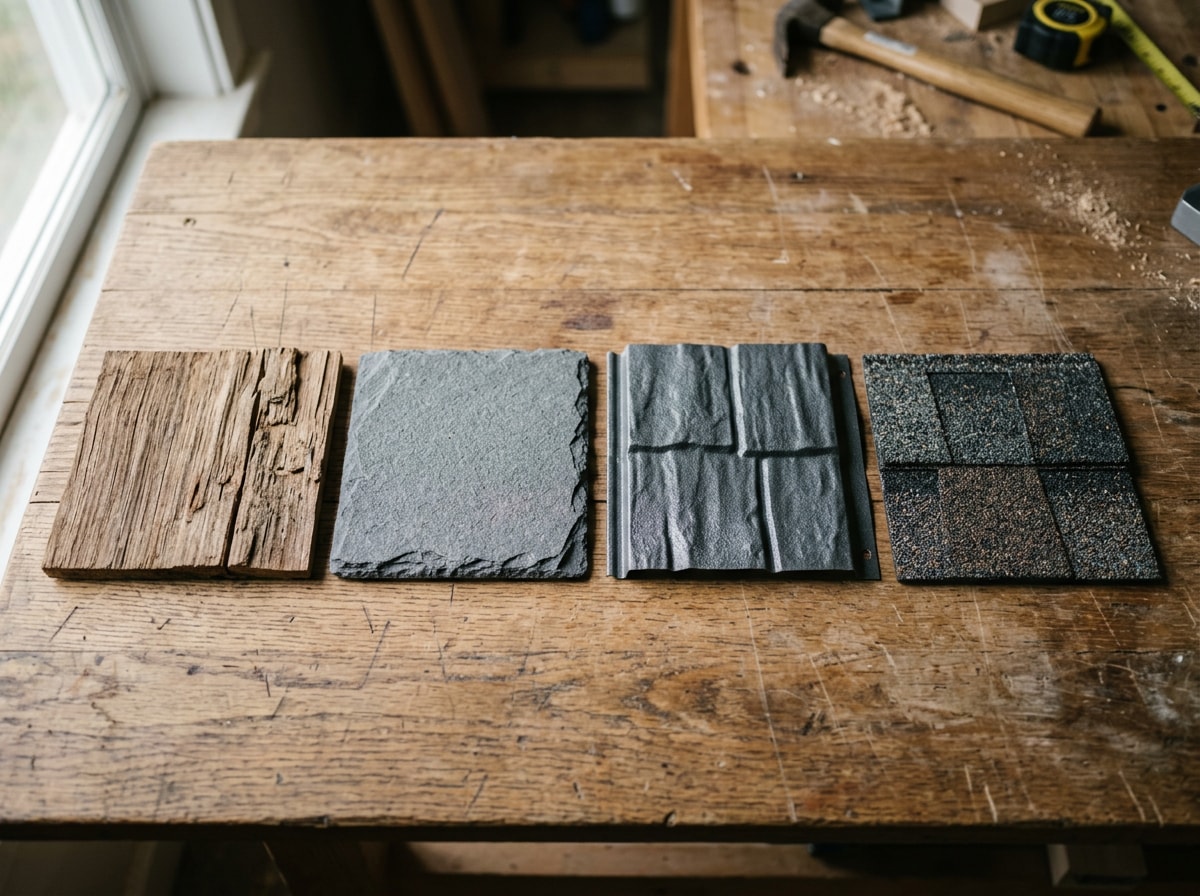
Homeowners comparing cedar shake to asphalt, composite slate, and metal should weigh lifespan and upkeep against upfront cost, not appearance alone.
| Material | Typical Lifespan | Relative Cost | Maintenance |
|---|---|---|---|
| Cedar shake | 25–40 years | High | Moderate-high (moss treatment, inspections) |
| Composition (asphalt) shingles | 20–30 years | Low | Low |
| Metal roofing | 40–60 years | High | Low |
| Composite slate | 30–50 years | Mid-high | Low-moderate |
These numbers vary by exposure, slope, and maintenance history, so treat them as a starting point rather than a guarantee. Homeowners who want the shake look without the wood maintenance often end up comparing cedar against standing seam metal panels, which can mimic a shake profile while cutting long-term upkeep. For a full rundown of material options available locally, see our roofing contractor services page.
How Cedar Shake Roofs Are Installed
Cedar shake installation follows four stages, and skipping any one of them is how roofs fail early:
- Deck inspection and prep. The crew checks existing sheathing for rot before a single shake goes down.
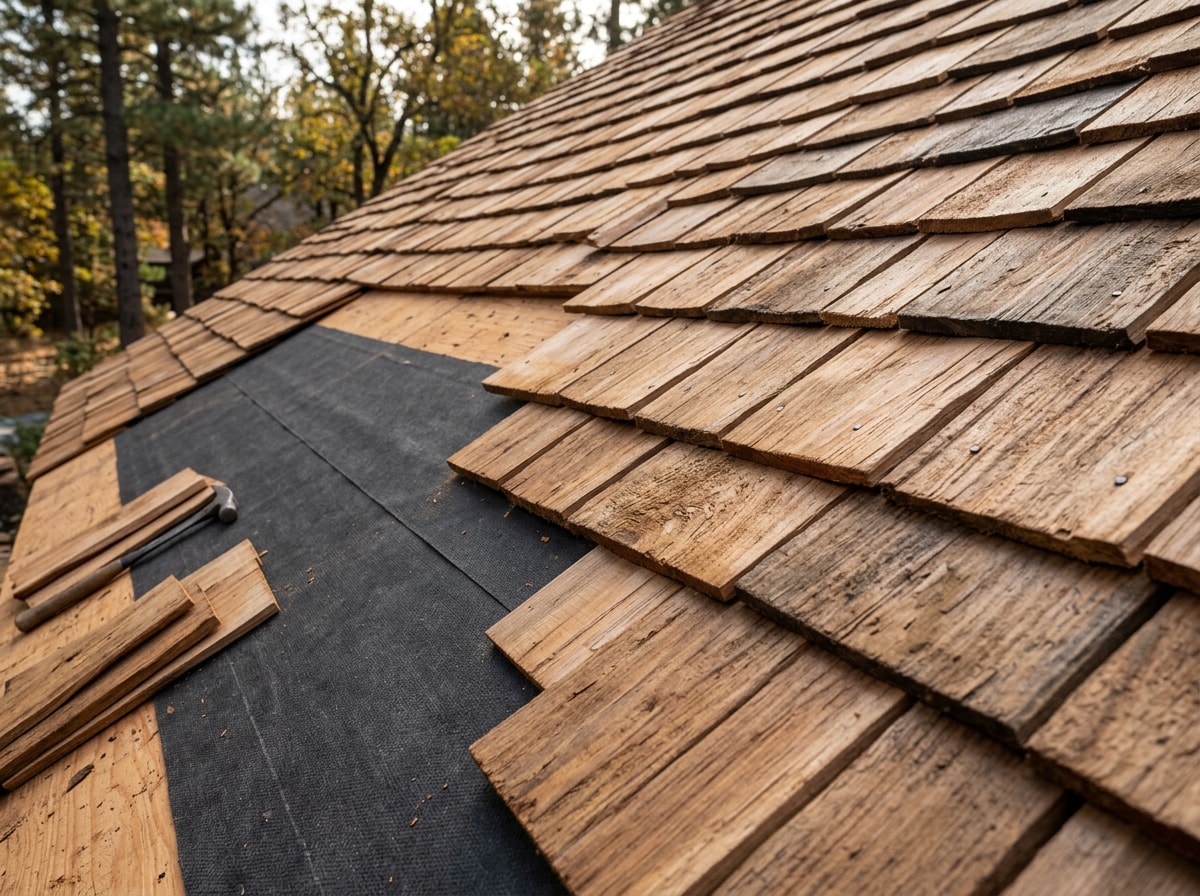
- Underlayment and spacing. Spaced sheathing and felt interlay let air move beneath the shakes, which matters more in Lake Oswego's damp climate than in drier regions.
- Shake placement. Courses overlap with staggered joints to shed water correctly.
- Trim and flashing work. Vents, chimneys, and valleys get sealed last, since these are the most common leak points on an older shake roof.
The Cedar Shake & Shingle Bureau publishes a roof installation manual so installers work from one authoritative reference instead of conflicting shop practices , and solid plywood sheathing is recommended for shakes and may be required in seismic regions or under treated shakes and shingles . Because this process differs so much from a standard asphalt install, hiring an experienced cedar installer isn't optional. It's the difference between a roof that lasts decades and one that fails in ten years.
Common Cedar Shake Roofing Problems We See in Lake Oswego Homes
Decades of shade from mature Douglas fir and big-leaf maple keep older cedar shake roofs damp even between rain events. That trapped moisture works into the decking over time, and rotted sheathing is often only discovered once the old shake comes off during tear-off.
On a recent tear-off in Mountain Park, our crew found a section of 1x6 skip sheathing soft enough to push a flathead screwdriver through by hand. That's not an unusual find under 25-year-old shake on a shaded lot. It's exactly why a realistic quote accounts for possible deck repair instead of assuming the sheathing underneath is fine.
Other issues we see regularly:
- Moss and algae buildup that holds moisture against the wood longer than bare shake would
- Failed valley and chimney flashing on roofs older than 15 to 20 years
- Ridge vents that no longer move air, which traps heat and moisture in the attic
If your roof shows heavy moss or soft spots underfoot, our roof repair services and roof cleaning services pages outline what inspection and treatment typically involve.
HOA Rules & Permits for Cedar Shake Conversions in Lake Oswego
Many neighborhoods around Lake Oswego carry CC&Rs that restrict shake-to-shingle conversions or require a specific architectural shingle color palette. Check your HOA's rules before finalizing a replacement estimate, since some boards require a submission and approval period before work starts.
On the permit side, Oregon generally requires a building permit to re-roof a house, and while minor repairs might be exempt, a complete tear-off and re-lay requires a permit . The person performing the work, whether a homeowner or contractor, is responsible for obtaining all necessary permits , so confirm requirements with your local building department before you set a budget. For replacement project details, see our roof replacement services page.
Why Choose a Specialty Cedar Shake Roofing Contractor in Lake Oswego
Cedar shake work demands specialized experience because decades-old shake often hides problems a generalist roofer won't catch: rotted decking, failed flashing, or ridge vents that no longer function. When vetting a contractor, ask directly about:
- Their cedar-specific installation experience, not just general roofing volume
- How they inspect for hidden deck damage before finalizing a bid
- Whether their estimate already accounts for possible repairs, or if that's a separate surprise later
A seasoned Lake Oswego roofing company should answer all three without hesitation. See our Lake Oswego service area page to confirm coverage near you, or visit our homepage to browse the full range of roofing, gutter, and siding work we handle.
FAQ
How long does a cedar shake roof last?
A well-maintained cedar shake roof typically lasts 25 to 40 years in this region, somewhat shorter than metal roofing but often longer than standard composition shingles under the same conditions.
How much does cedar shake roofing cost in Lake Oswego, OR?
Spot repairs run roughly $600 to $1,800. A full tear-off and re-roof typically lands between $18,000 and $42,000, depending mainly on whether the deck needs replacing. Get a walk-through inspection before trusting any number you haven't had confirmed on-site.
What maintenance does a cedar shake roof need?
Routine maintenance includes clearing debris, treating moss and algae growth, and replacing individual damaged shakes. Annual inspections catch small issues before they become costly repairs.
Why do cedar shake roofs in Lake Oswego fail faster than in nearby Tigard?
Lake Oswego's dense, mature tree canopy keeps roofs shaded year-round, so shake rarely dries out fully between rain events. That constant moisture rots the plywood decking underneath faster than in clearer, less-wooded suburbs like Tigard.
How do Lake Oswego HOA rules affect a cedar shake roof replacement?
Many neighborhoods around Lake Oswego have CC&Rs restricting shake-to-shingle conversions or requiring specific architectural shingle colors. Check your HOA's rules and any permit requirements before finalizing a replacement estimate.
What are the realistic alternatives to cedar shake?
The most common swaps are architectural asphalt shingles, composite/synthetic shake products, and metal panels profiled to resemble shake. Each trades some of cedar's natural texture for lower maintenance and a longer service life.
About the Author
This guide was written by the roofing team at West Coast Roofers & Gutters, led by a licensed Oregon general contractor with over a decade of hands-on experience inspecting and replacing cedar shake roofs across the Lake Oswego and Portland metro area. Questions about your specific roof? Contact us directly.