
An EPDM roofing system in Vancouver, WA is one of the most cost-effective ways to protect a flat or low-slope commercial roof from the region's near-constant rain. This guide breaks down real 2026 pricing, how EPDM stacks up against TPO and PVC, and the installation details that decide whether your roof lasts 15 years or 40. If you're comparing bids right now, start here before you sign anything.
Key Takeaways
- EPDM is a synthetic rubber membrane built for flat and low-slope commercial roofs.
- It's generally the most budget-friendly single-ply option, though TPO and PVC use heat-welded seams instead of adhesive.
- Vancouver's wet climate makes seam quality and drainage the deciding factors for any flat roof, not just the membrane brand.
- A 2025 industry survey found well-installed EPDM commonly lasts 25 to 40+ years, far longer than the "20-year" figure most homeowners still hear.
- Lifespan, cost, and performance all hinge on professional installation, not the material alone.
Why Vancouver, WA's Rain Is the Real Test for Any Flat Roof
Flat roofs in Southwest Washington rarely fail because of one storm. They fail because water sits on them for months at a time.
Every material decision on a commercial roof here, EPDM included, has to answer one question: how does it handle water that doesn't drain away quickly?
The National Weather Service's 1991–2020 climate normals for the Vancouver Pearson Airport station show the city averages well over 37 inches of precipitation a year, most of it falling between October and March. Ponding water that stands for 48 hours or more breaks down seams and adhesives faster than almost anything else.
This matters more for EPDM than for TPO or PVC. EPDM seams are typically glued rather than heat-welded, which makes seam prep the single biggest variable in whether a roof develops moisture damage years ahead of schedule.
Comparing Commercial Roofing Systems in Vancouver, WA: TPO, PVC, EPDM & Metal
Most commercial and flat-roof buildings in the Vancouver area use one of four systems: EPDM, TPO, PVC, or standing-seam metal. Before picking one, it helps to see how they actually compare on the things that matter locally: seams, cost, and constant moisture exposure.
Flat Roofing Basics
Flat or low-slope roofing describes any roof with a pitch too gentle for traditional shingles, typically under a 3:12 ratio. It's the standard choice for warehouses, retail strips, and multi-family buildings in Vancouver, WA, because it's cheaper to build and easier to add rooftop equipment to than a pitched roof. EPDM, TPO, and PVC are all designed specifically for this low-slope category.
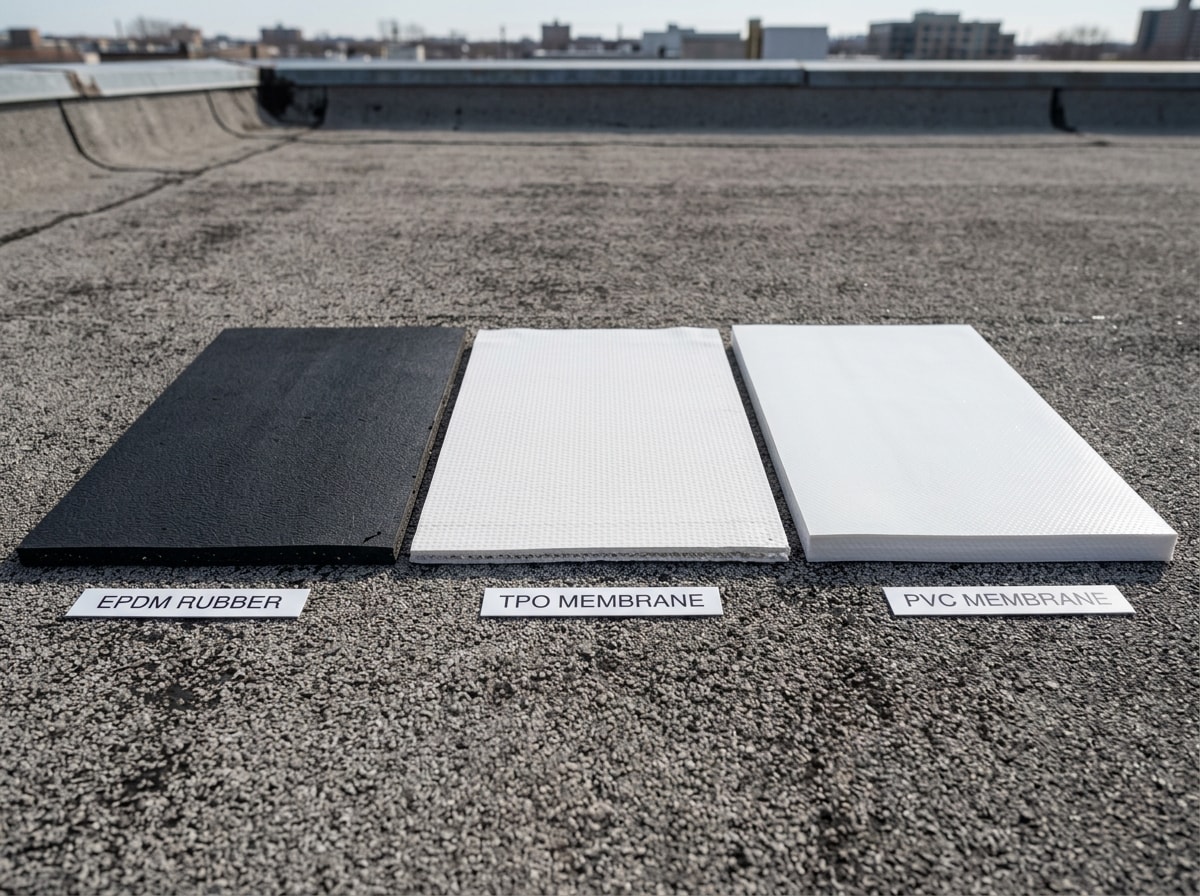
EPDM vs. TPO vs. PVC: 2026 Cost and Performance
EPDM is generally the lowest-cost single-ply option. TPO and PVC trade a slightly higher price for heat-welded seams that resist leaks better in standing water.
| Material | Typical Installed Cost (2026) | Reported Lifespan | Seam Method | Reflectivity |
|---|---|---|---|---|
| EPDM | $4.50–$7.50/sq ft | 25–40+ years when properly installed | Adhesive/taped | Low (black), unless coated |
| TPO | $5.50–$8.50/sq ft | 20–25 years | Heat-welded | High (white, reflective) |
| PVC | $6.50–$10.00/sq ft | 20–30 years | Heat-welded | High (white, reflective) |
Ranges reflect general national pricing for 2026 and vary by membrane thickness, insulation, and tear-off scope. Request a free estimate for exact Vancouver, WA pricing on your building.
Which System Fits Your Building
- Restaurants with grease exhaust often do better with PVC, since it resists oils that can degrade rubber over time.
- Warehouses with simple drainage usually get the best value from EPDM.
- Multi-family buildings tend to land on TPO, balancing reflectivity with mid-range cost.
Standards for membrane testing and seam strength are set by ASTM International's D4637 specification, which covers the physical property requirements EPDM sheet must meet.
What an EPDM Roofing System Actually Is
EPDM, short for ethylene propylene diene monomer, is a synthetic rubber membrane made from oil and natural gas byproducts. It's typically produced in sheets 45, 60, or 90 mils thick.
It's been used on low-slope commercial roofs in the Pacific Northwest for decades, largely because it's flexible enough to handle temperature swings without cracking.
Installation methods. Installers set an EPDM system one of three ways:
- Fully adhered with bonding adhesive.
- Mechanically fastened with plates and screws.
- Ballasted under a layer of stone.
Adhered systems are the most common choice in Vancouver, WA, since they handle wind uplift well without adding the weight ballast systems require. A properly executed EPDM installation depends almost entirely on seam prep and adhesive cure time. Rushed work here is the most common cause of early leaks.
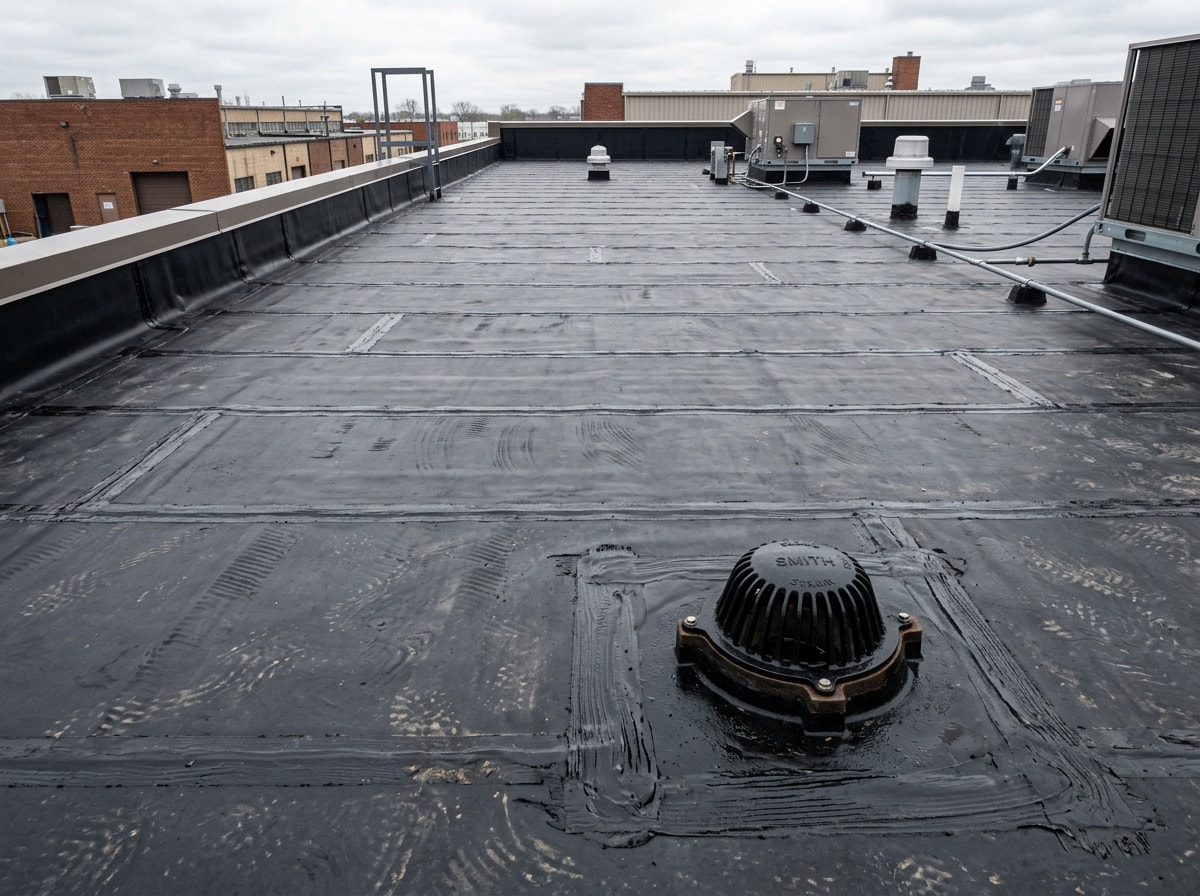
For buildings weighing EPDM against other commercial roofing systems, the material itself is rarely the deciding factor. The installer's seam work is.
EPDM Services: Installation, Repair, and Replacement
An EPDM system typically needs three types of service over its lifespan:
- New installation involves tear-off (if replacing an old roof), insulation work, and membrane adhesion or fastening.
- Roof replacement becomes necessary once seams fail repeatedly, membrane thickness thins from UV exposure, or ponding damage spreads beyond patching.
- Roof repair covers smaller fixes: reseaming, patching punctures, or resealing flashing around vents and HVAC units.
A reputable roofing contractor will run a roof inspection before recommending full replacement, since many EPDM problems are isolated to seams or flashing rather than the whole membrane.
On inspections across Clark County flat roofs, we most often trace EPDM leaks back to under-cured seams at parapet walls and rooftop curbs, not failure of the membrane field itself. Catching that early with a routine inspection usually costs a fraction of a full tear-off.
If your roof is already past the 20-year mark, it's worth requesting a free estimate before a small seam issue turns into a deck-level repair.
Why Installation Quality Decides EPDM's Long-Term Performance
Seam failure is the number one reason EPDM roofs leak, which makes installation quality more important than almost any other factor in the material's long-term performance.
A 2025 survey of 569 roofing professionals conducted by the EPDM Roofing Association found that properly installed and maintained EPDM systems commonly deliver 25 to 40+ years of service, with many respondents reporting membranes still performing at 45 and even 50 years old. That's a meaningfully longer track record than the "20-year" figure that still circulates in a lot of sales material.
A licensed roofing contractor carries the insurance and manufacturer certification needed to back a warranty, something a handyman crew generally can't offer. Manufacturer warranties on EPDM systems are typically voided if installation doesn't follow specific seam-overlap and adhesive-cure standards. For a deeper look at how those terms work, see our guide on roofing warranties explained.
If you want a white or light-colored EPDM membrane to cut summer cooling costs, the EPA's ENERGY STAR program sets the reflectance standards that qualify a roof as a "cool roof."
Hiring a contractor familiar with Vancouver, WA's climate and code requirements protects both the warranty and the building underneath. Our team at West Coast Roofers & Gutters services commercial and residential flat roofs throughout the metro.
FAQ
What is the best commercial roofing material for heavy rain in the PNW?
PVC and TPO generally handle heavy rain and ponding slightly better than EPDM, thanks to heat-welded seams. EPDM remains a strong, budget-conscious option when installed professionally with proper drainage and seam detailing.
How long does an EPDM roof last?
Industry survey data from 2025 shows properly installed EPDM commonly lasts 25 to 40+ years, with some membranes still performing at 45 to 50 years. Actual lifespan depends heavily on membrane thickness, attachment method, and how consistently the roof is maintained.
How much does EPDM roofing cost?
EPDM roofing generally runs $4.50 to $7.50 per square foot installed in 2026. Price varies based on membrane thickness, insulation requirements, and whether tear-off of an old roof is needed first.
Is EPDM roofing better than TPO?
Neither system is universally "better." EPDM costs less, while TPO offers heat-welded seams and higher reflectivity. The right choice depends on your building type and budget; a free quote can clarify which fits your roof.
Can you walk on an EPDM roof?
Yes, but carefully. EPDM resists foot traffic reasonably well, but repeated walking in the same path can wear thin spots over time. Use walk pads near HVAC units or any area with regular access.
How do you maintain an EPDM roof?
Clear debris from drains twice a year, check seams and flashing after major storms, and schedule a professional inspection annually. Most EPDM failures start small and are cheap to fix if caught early.
About the Author
This guide was written by the roofing team at West Coast Roofers & Gutters, a Vancouver, WA-based contractor serving flat and low-slope commercial roofs throughout Southwest Washington and the Portland Metro area. Our crews install, repair, and inspect EPDM, TPO, and PVC roofing systems and have seen firsthand which seam and drainage mistakes cause early failures in this climate. Questions about your roof? Contact us for a free, no-pressure estimate.