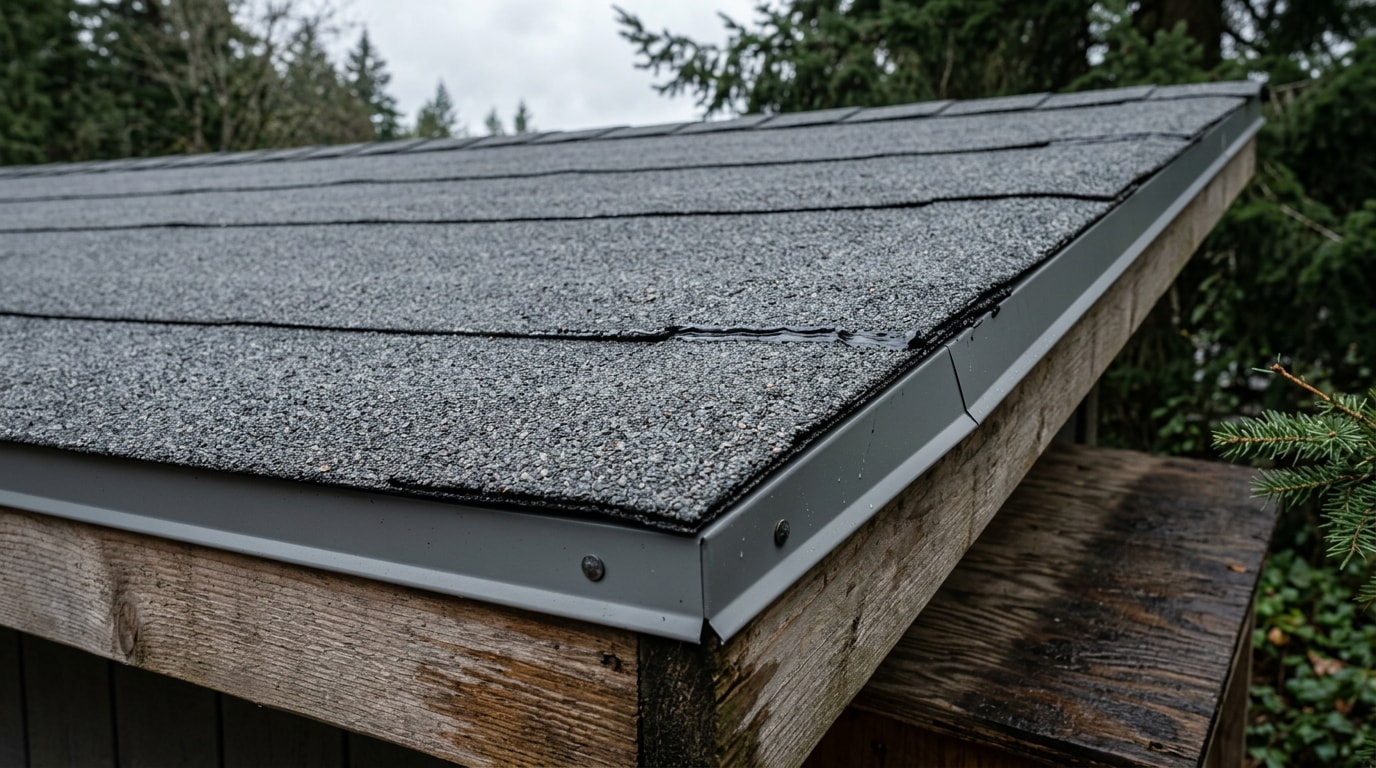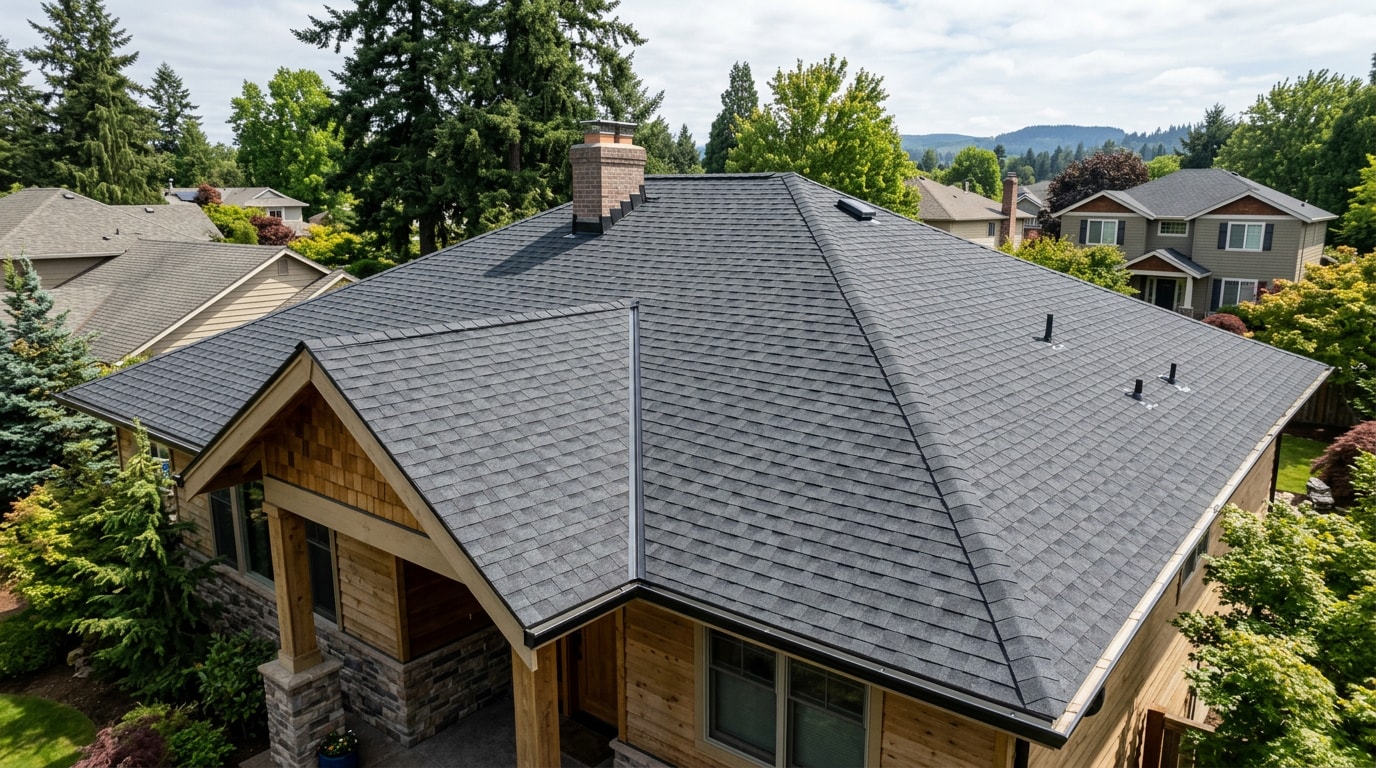
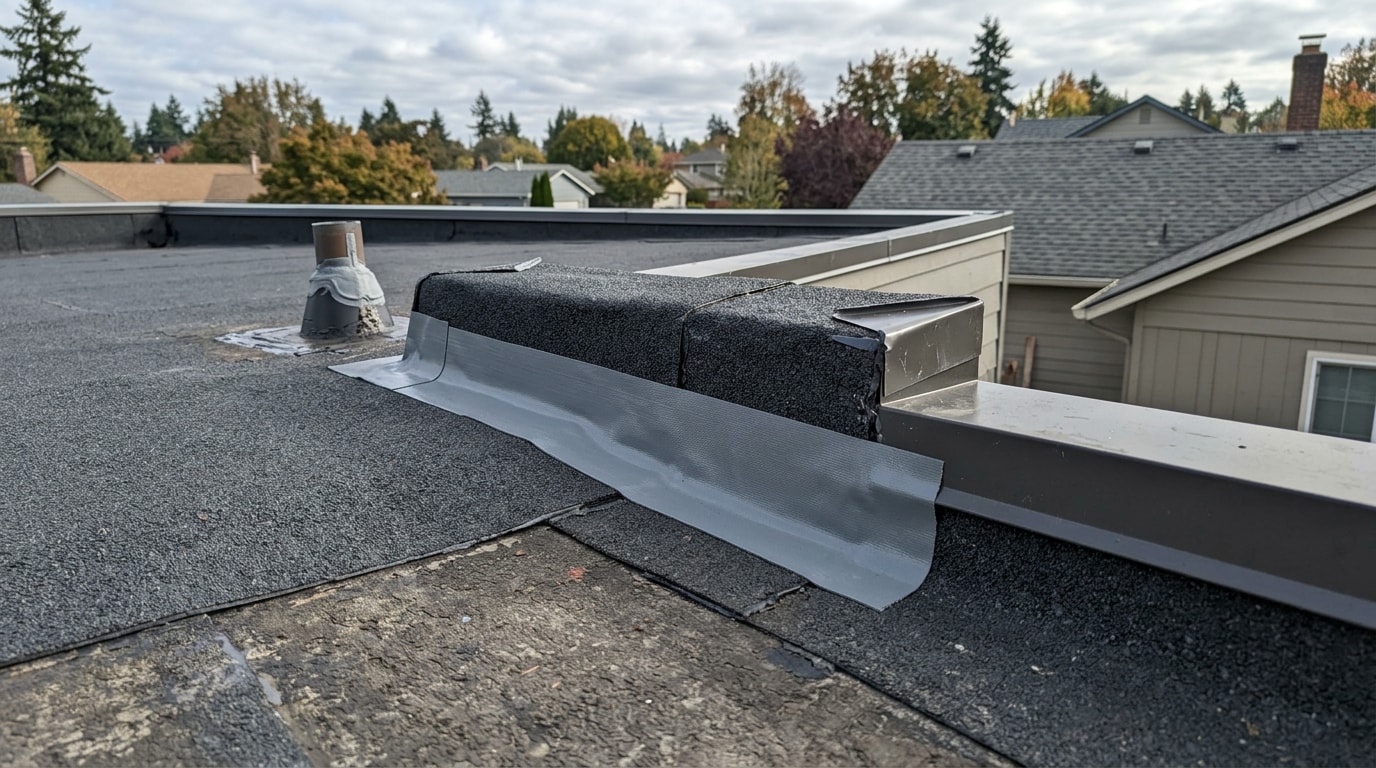
If you've spotted a leaky seam or a lifted flashing edge, roofing tape in Gresham, OR can be a fast, affordable first move, but only if you pick the right product and apply it correctly. This guide breaks down the types, the realistic lifespan, and the exact prep and application steps before you buy anything or call a professional.
What Is Roofing Tape?
Roofing tape is a self-adhesive, pressure-sensitive material designed to seal seams, flashing joints, and small punctures without the mess or cure time of liquid sealants. It sticks directly to a prepared roof surface and creates a waterproof bond that resists wind and rain once properly set.
Most roofing tape products fall into one of three jobs:
- Seam tape covers and seals joints between two pieces of roofing membrane, like TPO or EPDM.
- Flashing tape wraps around vents, pipes, chimneys, and other roof penetrations where water tends to find its way in.
- General-purpose repair tape handles smaller jobs: a cracked vent boot, a lifted gutter seam, or a quick patch over a hole until a proper repair can happen.
Each type uses slightly different adhesive chemistry, and that matters more than most people expect when matching tape to a roof surface.
Types of Roofing Tape Compared
Four tape families cover nearly every residential repair scenario, and each one performs differently depending on the surface and the weather it has to survive.
Butyl tape is a thick, rubber-based adhesive known for aggressive tack and strong water resistance. It works well on metal flashing, gutters, and seams where a flexible, long-term bond matters more than a tidy finish. EPDM seam tape is formulated specifically to bond to rubber roofing membranes, making it the standard choice for single-ply roof seams. Asphalt-aluminum foil tape is the cheapest and most widely available option at hardware stores, but it tends to dry out and crack faster under UV exposure than the other three. Peel-and-stick flashing tape usually combines a butyl or modified-bitumen core with a foil or polymer facer, giving it both flexibility and a finished look around chimneys and vent stacks.
| Tape Type | Adhesive/Backing | Best Surfaces | Typical Size | General Lifespan Range |
|---|---|---|---|---|
| Butyl repair tape | Butyl rubber, foil or poly facer | Metal, gutters, flashing | 4-6 in. rolls | Several years to a decade-plus |
| EPDM seam tape | Butyl with EPDM-compatible primer | Rubber/EPDM membranes | 3-6 in. rolls | Up to a decade or more |
| Asphalt-aluminum tape | Asphalt-saturated, aluminum facer | Asphalt seams, quick patches | 2-4 in. rolls | 2-5 years |
| Peel-and-stick flashing tape | Modified bitumen or butyl core | Vent pipes, chimneys, valleys | 6-12 in. rolls | Several years to a decade-plus |
Many self-adhering flashing and underlayment membranes used in roofing are tested against ASTM International's D1970 specification, which covers physical requirements including thickness, maximum load, elongation, adhesion to plywood, thermal stability, flexibility, tear resistance, moisture vapor permeance, sealability, and slip resistance . Building codes have taken notice: self-adhering bituminous membranes are required by building codes to meet the requirements of ASTM D1970, and newer codes require these products to have a label indicating compliance . Checking for that label is a quick way to separate a code-recognized product from a bargain-bin patch.

Which Roofing Tape Works on Your Roof?
Not every tape bonds to every roof material, and using the wrong one is the single most common reason a repair fails within weeks instead of years. Matching tape chemistry to your actual roof surface matters more than brand reputation.
Metal roofing and flashing generally pair best with butyl tape or peel-and-stick flashing tape, since both flex with temperature swings without cracking. TPO and EPDM membranes need tape formulated for those specific materials, since standard asphalt tape won't form a lasting bond to synthetic rubber or thermoplastic surfaces. Gutters benefit from butyl tape's strong initial tack and long-term flexibility around seams that shift slightly with temperature.
Asphalt shingles are the trickiest surface. Most roofing tape for shingles doesn't bond well to the granulated surface itself. It's really meant for the metal or rubber flashing underneath shingle courses, not the shingles directly. A tape patch laid flat over granules usually lifts within a season or two.
If you're unsure which product fits your specific roof, a roof inspection can confirm compatibility before you spend money on the wrong tape.
Is Roofing Tape a Permanent Fix or Just a Temporary Patch?
Roofing tape's lifespan depends entirely on the product and how it's applied. It's rarely a true "permanent" fix the way a full reroof is. Some manufacturers back their premium tape products with real warranties rather than vague marketing claims: EternaBond roof tape products are used by professional applicators throughout the world and are backed by Eternabond's great 10 Year Warranty , which gives you an actual benchmark rather than a guess.
Cheap asphalt-foil tape is a different story. It's genuinely useful as a stopgap, but expect a short service life before UV exposure dries out the adhesive and the edges start to curl.
Gresham's climate adds its own wrinkle. The Portland metro area, which includes Gresham, sees average highs well below the 60-70°F range most adhesives are rated for during several months of the year: January averages a 48°F high and 36°F low, November runs 54°F and 41°F, and December drops to a 47°F high and 36°F low , based on 1991-2020 climate normals. That combination of moisture and cooler temperatures can shorten tape lifespan compared to drier, warmer climates. It's worth treating any tape repair as a bridge to a proper fix rather than a final answer, especially on a roof that's already showing its age. Our DIY roofing repair guide for Gresham homeowners covers which patch jobs are safe to tackle yourself and which ones aren't.
How to Apply Roofing Tape So It Actually Holds
Every tape manufacturer and roofing professional agrees on one point: application technique determines whether a tape repair lasts for years or peels up within days, far more than which brand you buy.
Gresham's cool, damp fall and winter conditions make this especially tricky. A practical workaround: warm the tape roll indoors before heading up, use a heat gun lightly on the substrate to drive off surface moisture and raise its temperature, and plan the job for a dry afternoon window rather than first thing on a damp morning.
Surface Prep: Where Taped Repairs Live or Die
Surface prep determines whether roofing tape bonds for years or fails within weeks. Work on a dry day above the manufacturer's minimum temperature, scrub the area clean, wipe it with denatured alcohol or a manufacturer-approved primer, and round any patch corners to prevent peeling from the edges inward.
Different surfaces need different prep:
- Steel and other metal flashing often need rust removal with a wire brush and a metal primer before tape will grip reliably.
- TPO and EPDM membranes need an acetone wipe or a rubber-specific cleaner, since oils and mold-release agents left on new membrane can block adhesion entirely.
Manufacturer guidance backs this up directly. The Asphalt Roofing Manufacturers Association notes that at the time of installation, the air, product, and substrate temperatures should be at or above the minimum application temperature recommended by the manufacturer, and while the typical minimum temperature range for application is 40-50°F, you should consult the specific manufacturer for colder weather application . It also confirms that the substrate must be free of any dust, dirt, oils, moisture or debris that could interfere with proper adhesion . Skipping primer on a porous or oxidized surface is one of the fastest ways to turn a tape repair into a repeat callback.

Tools You'll Need to Apply Roof Repair Tape
A basic roofing tape application kit is short:
- Tape measure
- Sharp utility knife
- Hand or steel seam roller
- Denatured alcohol or the manufacturer's specified cleaner
- Work gloves
The roller matters more than it seems. Pressing and rolling firmly from the center of the patch outward, not just the initial stick, is what forces out trapped air and creates a watertight seal. Since this work happens at height, fall protection isn't optional even for a five-minute patch job. OSHA's guide for roofing workers notes that employers and workers should understand the requirements of OSHA's Fall Protection standards at 29 CFR 1926, Subpart M, to protect workers exposed to falls six feet or more above a lower level . If a ladder, steep pitch, or wet shingles make you hesitate, that's your signal to get a free estimate instead of climbing up yourself.
What Roofing Tape Cannot Do (and When to Call a Pro)
Roofing tape is useful, but it isn't a cure-all. Knowing its limits upfront saves time, money, and the frustration of a repair that fails almost immediately.
What Roofing Tape Cannot Do
Tape can't rescue a roof with systemic problems. Widespread granule loss, rotten decking, or fasteners backing out across a large area all point to a bigger repair than any tape can address. It also can't reliably bridge structural cracks wider than about 1/8 inch without added reinforcing fabric underneath, since the tape itself will simply flex and tear at the gap.
Contamination is another dealbreaker. Tape generally won't bond to a surface that's been treated with silicone sealant or silicone-based coatings, since silicone leaves a film that resists nearly all adhesives. If a previous repair used silicone, plan on removing it entirely before any tape goes down, or skip tape for that spot altogether.
When damage looks structural rather than cosmetic, it's worth getting a second opinion before relying on a patch. A sagging deck, soft spots underfoot, or repeated leaks in the same area usually mean a section needs a roof repair rather than another round of tape. If water is actively coming in right now, our emergency roof repair crew can stop the damage the same day.
Tape vs. Caulk and Liquid Sealants
Tape and caulk solve similar problems differently. Tape goes on instantly with no cure time and performs best on straight seams and flat joints, like a seam between two membrane sheets or a flashing edge. Caulk and liquid rubber sealants, by contrast, flow into irregular gaps and conform to complex shapes, such as a jagged crack, an odd-angled corner, or a penetration with uneven clearance, that tape simply can't bridge without wrinkling or leaving gaps.
A simple rule covers most situations: reach for tape on straight, flat joints where speed matters, and reach for liquid sealant when the gap is irregular or the surface has tight corners tape can't conform to. Some repairs benefit from both: tape over the main seam, with a bead of sealant finishing the edges.
Best Roof Repair Tape Brands for Gresham Homes
These picks were chosen for broad substrate compatibility, UV stability, and a track record of holding up in real-world field conditions rather than just lab testing.

EternaBond RoofSeal Sealant Tape
EternaBond RoofSeal has built a reputation among roofing professionals for substrate versatility: it bonds to a wide range of surfaces, including roof materials such as EPDM, TPO, Hypalon, aluminum, galvanized steel, wood, and fiberglass . Its thick, rubberized adhesive layer stays flexible across seasonal temperature swings instead of cracking, and the manufacturer's 10-year warranty gives you a concrete lifespan benchmark rather than a vague claim.
ThermaCote Roof Repair Tape
ThermaCote is known for strong initial adhesion and good conformability around curved or irregular shapes, making it a reasonable match for gutters, piping, and rounded vent boots where flat tape tends to wrinkle. The adhesive grabs fast, which helps when a quick, reliable stick matters more than a slow, careful application.
APOC Incredible® Repair Tape and Sealant
APOC Incredible Repair Tape sits in the same general-purpose repair category as the two products above but at a friendlier price point, making it a practical pick for budget-conscious repairs that still need real durability. It's a reasonable middle-ground choice when a job calls for more than hardware-store asphalt tape but doesn't need a premium price tag.
When to Call a Gresham Roofing Pro Instead of Taping It Yourself
A tape patch is a fine stopgap, but it isn't a substitute for an experienced eye. Our crews at West Coast Roofers & Gutters handle everything from quick flashing patches to full roof replacements across the Portland metro, and Gresham's fall windstorms are a regular source of lifted flashing and torn seam calls. We've seen plenty of DIY tape jobs that held for a season and then failed at the first hard freeze because the surface wasn't properly cleaned or primed first.
If you want to see the kind of work a licensed crew does on roofs like yours, browse our completed projects or check out our Gresham, OR service area page. For anything beyond a small, straightforward patch, get a free estimate before you spend money on a repair that might not hold.
FAQ
Does Roof Tape Actually Work?
Yes. Roofing tape works reliably when the tape type matches the roof surface and that surface is clean and dry before application. Most reported failures trace back to using the wrong tape for the material, skipping surface prep, or applying it in damp or cold conditions, not a flaw in the concept itself.
How Long Does Roof Tape Last?
Lifespan depends heavily on the product. Premium butyl or EPDM seam tape from established manufacturers often carries warranties of a decade or longer, while cheaper asphalt-aluminum tape typically holds up for only 2 to 5 years before it dries out and the edges lift. Climate, UV exposure, and surface prep all affect where a given repair falls in that range.
Will Roof Tape Work on Shingles?
Roof tape generally works only as a short-term patch on asphalt shingles rather than a permanent bond, since most tape adhesives don't grip the granulated shingle surface well long-term. It's better suited to sealing the flashing or seams beneath shingle courses than the shingles themselves.
Can I Apply Roofing Tape in the Rain or Cold Weather?
No, not reliably. Most tape adhesives need a clean, dry surface and air/substrate temperatures above roughly 40-50°F to bond properly. Applying tape on a wet or near-freezing roof almost always leads to a failed seal within days.
How Much Does Roofing Tape Cost?
Small rolls of basic asphalt-aluminum tape run cheap at any hardware store, while premium butyl or EPDM seam tape and branded products like EternaBond cost more per roll but last considerably longer. For a single small patch, tape is far less expensive than a service call; for anything larger or recurring, a professional repair is usually the better value.
{ "hero": { "prompt": "Photoreal close-up of a residential asphalt shingle roof corner with a newly applied strip of gray peel-and-stick roofing flashing tape sealing a metal vent pipe penetration, overcast Pacific Northwest daylight, visible roller marks pressed into the tape edges, clean finished workmanship, no people, no logos, high detail texture on shingles and tape surface", "alt": "Freshly applied roofing tape sealing a vent pipe penetration on a shingle roof" }, "inline": [ { "id": "inline-1", "prompt": "Photoreal overhead flat-lay of four different roofing tape rolls side by side on a clean plywood workbench: thick black butyl tape, gray EPDM seam tape, silver asphalt-aluminum foil tape, and a wide peel-and-stick flashing tape roll with its release liner partially peeled back, soft natural light, no people, no text overlays, realistic material textures", "alt": "Four types of roofing tape rolls compared side by side on a workbench" }, { "id": "inline-2", "prompt": "Photoreal sequence-style single image showing a section of metal roof flashing being prepped for tape application: wire brush marks on one side, a clean alcohol-wiped section in the middle, and a rounded-corner tape patch already applied on the right side, daylight, close-up macro detail, no people, no text", "alt": "Metal roof flashing surface prepared and partially taped showing cleaning and corner rounding" }, { "id": "inline-3", "prompt": "Photoreal product-style still life of three rolls of professional-grade roof repair tape standing upright on a workbench with a tape measure and utility knife nearby, soft studio-like daylight from a window, clean background, no people, no visible brand logos or text", "alt": "Three rolls of professional roof repair tape with basic application tools on a workbench" } ] }